Medical Device Parts Manufacturing: Clean, Precise, Documented
Medical parts end up near or inside the body, which changes everything: biocompatible materials, cleanable finishes, and documentation as the real deliverable.

Medical parts carry a burden most parts don't: they end up near, on, or inside a human body. That single fact changes everything upstream — the materials you're allowed to use, the finishes you must achieve, the records you have to keep, and how clean the part has to be when it leaves the shop. A medical part that's dimensionally perfect but contaminated or undocumented is a reject.
Biocompatibility narrows the menu
You can't just pick a convenient alloy. Materials that contact the body or bodily fluids have to be biocompatible — which is why medical work concentrates on a short list: medical-grade stainless (often 316L), titanium for implantable and surgical parts, and specific engineering plastics like PEEK. Titanium earns its place with strength, corrosion resistance and body-friendliness (machining titanium), and the polymer side runs on certified engineering plastics.
Surface finish is a clinical spec
In most industries a surface finish is about looks or wear. In medical it can be about cleanability and tissue interaction. Smooth, crevice-free surfaces don't harbour bacteria and clean reliably; certain implant surfaces are deliberately textured to encourage bone growth. Stainless parts are almost always passivated — and often electropolished — to maximise corrosion resistance and leave a clean, smooth surface (passivation and electropolishing). A burr that's trivial elsewhere is unacceptable on a surgical instrument, so deburring is taken seriously (deburring methods).
Small, intricate, and precise
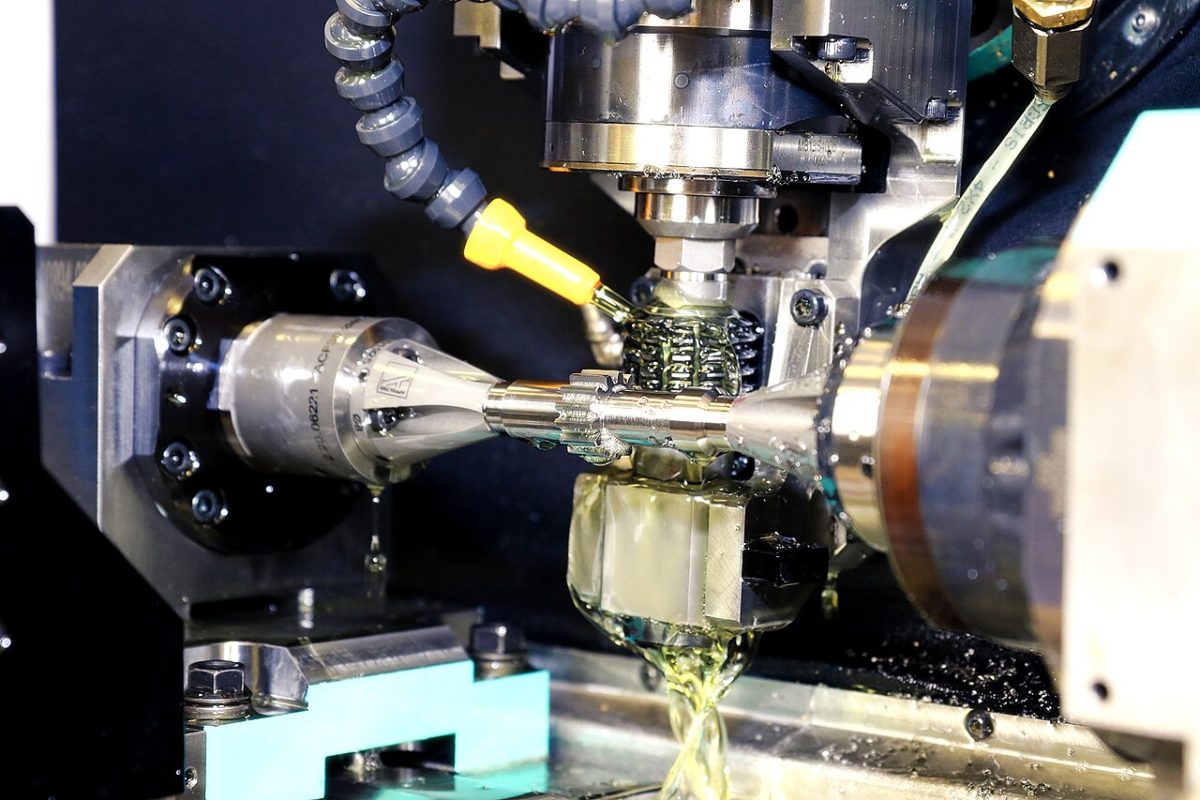
A lot of medical componentry is tiny and feature-dense — bone screws, surgical instrument tips, fittings, housings for diagnostic devices. That's natural territory for Swiss machining, which excels at small, slender, high-precision turned parts, and for 5-axis work on complex instrument geometry.
The documentation is the deliverable
Like aerospace, medical manufacturing is a paperwork discipline as much as a machining one. Material traceability back to the certified lot, full inspection records, and process control aren't extras — they're how a regulated device proves it's safe. Expect first-article inspection, CMM verification, and complete certs and traceability on every lot.
| Common medical part | Typical material |
|---|---|
| Surgical instruments & tips | Medical stainless, titanium |
| Implant components | Titanium, PEEK |
| Bone screws & fixation hardware | Titanium, stainless |
| Diagnostic / device housings | Aluminum, engineering plastics |
We machine medical-grade stainless, titanium and engineering plastics to the tolerances, finishes and cleanliness these parts demand — with passivation/electropolishing, careful deburring, and the inspection records and traceability that regulated devices require. For a device program that needs parts made right and documented properly, send your drawing and spec or discuss the requirements with us. Our medical component manufacturing guide goes deeper on the process side.
Related capabilities
Have a part to make?
Upload your CAD for a detailed quote and free DFM feedback within 24 hours.