Precision Medical Components: Standards & Materials
A guide to manufacturing precision medical components: ISO 13485, biocompatible materials, tight tolerances, finishing, cleanliness, and traceability.

Few sectors demand more from a precision manufacturer than the medical device industry. A component that meets every print dimension is still a failure if its material leaches into tissue, if its surface harbors bacteria, or if there is no documented chain of evidence proving how it was made. For engineers designing implantable and interventional devices, and for procurement buyers qualifying new supply, the manufacturing decision is inseparable from regulatory and material science decisions. This article walks through the standards, materials, tolerances, finishes, and documentation that define competent medical component manufacturing.
Why Medical Manufacturing Is Different
Most industrial parts are judged on form, fit, and function. Medical parts must satisfy those criteria and then clear a higher bar: they must be safe inside or against the human body, manufactured under a controlled and auditable system, and traceable back to their raw material lot. A bracket for a machine can be reworked quietly; a surgical instrument or an orthopedic implant cannot, because regulators, hospitals, and ultimately patients depend on the integrity of every unit.
This shifts the engineering conversation. Surface roughness becomes a cleanliness and biocompatibility concern, not just a wear concern. Tolerance can govern how a device seats against bone or seals against fluid. The same CNC machining, molding, and finishing processes used across general manufacturing apply here, but they are wrapped in a quality system that controls every input and records every output.
The Quality System Foundation: ISO 13485
The cornerstone standard for medical device manufacturing is ISO 13485, the international quality management system standard specific to medical devices. While ISO 9001 establishes general quality management principles applicable to any manufacturer, ISO 13485 layers on requirements tailored to the regulated nature of medical products: heightened risk management, design controls, process validation, and rigorous documentation and record retention.
A supplier certified to ISO 9001 demonstrates a mature, audited quality discipline that forms the natural base for medical work, on which ISO 13485 layers device-specific expectations. Key elements a buyer should look for include:
- Risk management aligned with ISO 14971, applied across the product lifecycle rather than as a one-time exercise.
- Process validation (IQ/OQ/PQ — installation, operational, and performance qualification) for processes whose output cannot be fully verified by later inspection, such as injection molding, welding, or sterilization.
- Design and development controls with documented inputs, outputs, verification, and validation.
- Document and record control with defined retention periods, because a record may need to be produced years after a device ships.
- Corrective and preventive action (CAPA) that formally closes the loop on nonconformities.
Destination markets add further frameworks. Devices sold in the United States fall under the FDA's Quality System Regulation (21 CFR Part 820), which the FDA has been harmonizing toward ISO 13485, while devices sold in the European Union must comply with the EU Medical Device Regulation (MDR 2017/745). A component manufacturer does not certify a device on a buyer's behalf, but it must operate a quality system capable of supplying the parts and documentation those frameworks require.
Biocompatible Materials
Material selection is where medical manufacturing departs most sharply from general engineering. The governing reference is the ISO 10993 series, which defines the biological evaluation of medical devices — cytotoxicity, sensitization, irritation, and other endpoints scaled to how and how long a device contacts the body. A material is not "biocompatible" in the abstract, but for a defined contact type and duration. The following materials dominate precision medical work.
Titanium and Titanium Alloys
Commercially pure titanium and the alloy Ti-6Al-4V (including the lower-interstitial ELI grade often specified for implants) are the workhorses of orthopedic and dental implants. Titanium offers an excellent strength-to-weight ratio, outstanding corrosion resistance, and a well-documented ability to osseointegrate — to bond directly with bone. It is also non-ferromagnetic, which matters for MRI compatibility. The tradeoff is that it is comparatively difficult to machine, generating heat and demanding rigid tooling and controlled cutting parameters.
316LVM and 316L Stainless Steel
Austenitic stainless steel remains a mainstay for surgical instruments, fasteners, and some implants. The 316L grade is low-carbon for improved corrosion resistance, and the 316LVM variant is vacuum-melted (vacuum arc remelting) to reduce inclusions and improve fatigue performance in cyclically loaded parts. Stainless steel is more economical and easier to machine than titanium, but denser and less corrosion-resistant over very long implantation periods.
Cobalt-Chrome Alloys
Cobalt-chromium-molybdenum alloys (such as the ASTM F75 cast and F1537 wrought grades) deliver high wear resistance and strength, making them a standard choice for load-bearing and articulating surfaces like joint replacement bearings. They are harder to machine than stainless steel and are frequently produced by precision casting or, increasingly, additive manufacturing.
PEEK and Medical Polymers
PEEK (polyetheretherketone) is a high-performance thermoplastic valued for a stiffness close to bone, radiolucency (it does not obscure X-ray imaging), chemical resistance, and tolerance of repeated steam sterilization. Implant-grade PEEK is widely used in spinal cages and other applications where avoiding the rigidity of metal is an advantage. Other medical polymers — including polycarbonate, polyethylene (notably UHMWPE for bearing surfaces), and silicone — serve housings, single-use devices, and soft-tissue applications.
| Material | Typical Applications | Key Strengths | Considerations |
|---|---|---|---|
| CP Titanium / Ti-6Al-4V (ELI) | Orthopedic and dental implants, bone screws | Osseointegration, corrosion resistance, low density, MRI-compatible | Harder to machine; tooling and heat management critical |
| 316L / 316LVM stainless | Surgical instruments, fasteners, some implants | Economical, good machinability, VM grade improves fatigue life | Denser; lower long-term corrosion resistance than titanium |
| Cobalt-chrome (CoCrMo) | Joint bearing surfaces, load-bearing implants | High wear resistance and strength | Difficult to machine; often cast or additively built |
| PEEK | Spinal cages, radiolucent components | Bone-like stiffness, radiolucent, sterilization-tolerant | Higher material cost; machining parameters must control heat |
| UHMWPE | Articulating bearing surfaces | Low friction, high wear resistance against metal/ceramic | Sensitive to oxidation; processing history matters |
Tolerances and Surface Finish
Medical components frequently carry tolerances measured in microns. A press fit, the seal of a fluidic path, or the mating of a multi-part assembly can all depend on dimensional control well tighter than general machining. Holding these tolerances requires capable equipment, temperature-controlled environments where appropriate, and metrology — coordinate measuring machines (CMM), optical comparators, and surface profilometers — calibrated and traceable to recognized standards.
Surface finish carries unusual weight here. A rough surface increases the area available for bacterial adhesion, complicates cleaning and sterilization, and on an implant can influence the biological response of surrounding tissue. Two finishing processes are especially important for metals:
Electropolishing
Electropolishing is an electrochemical process that removes a thin, uniform layer of surface material, preferentially dissolving microscopic peaks. The result is a smoother, brighter surface with a reduced roughness average (Ra), fewer crevices for contaminants, and improved corrosion resistance. It is widely applied to stainless steel surgical instruments and titanium components requiring a clean, deburred, low-Ra surface.
Passivation
Passivation is a chemical treatment — commonly governed by ASTM A967 for stainless steels — that removes free iron and surface contaminants and promotes a stable, chromium-rich oxide layer. This passive film is what gives stainless steel its corrosion resistance; passivation does not appreciably change dimensions. The two processes are frequently used in sequence: electropolish to refine the surface, then passivate to maximize the protective oxide.
Cleanliness and Contamination Control
Cleanliness in medical manufacturing extends beyond a visually clean part. Manufacturers must control particulate, residual processing fluids, and biological contamination through validated cleaning processes and, where required, production in controlled environments such as ISO 14644 classified cleanrooms. The concern is twofold: contaminants that could be transferred to a patient, and residues that could interfere with downstream coating, bonding, or sterilization. For parts that will be sterilized, the manufacturer must also understand the method involved — steam, ethylene oxide, or radiation — because material choice and surface condition affect how a part responds to it.
Traceability and Documentation
If one practice separates medical manufacturing from the rest of precision work, it is the depth of traceability — a documented thread connecting a finished component back through every operation to the certified raw material lot it came from. This is what lets a manufacturer respond precisely if a material nonconformity or field issue arises, isolating affected lots rather than recalling everything.
A robust traceability package typically includes:
- Material certifications — mill test reports or certificates of conformance tying each lot to its chemical composition and mechanical properties, against the relevant ASTM or ISO specification.
- Lot and batch records documenting which raw material, tooling, and parameters produced a given run.
- Inspection records — first article reports, in-process checks, and final dimensional data from calibrated, traceable instruments.
- Certificate of conformance for the shipped product, attesting it was manufactured and inspected to the agreed requirements.
- Process and validation records for special processes, retained for the periods the quality system defines.
Increasingly, devices and even individual components carry Unique Device Identification (UDI) markings, applied by methods such as laser marking that must themselves be validated. Good documentation is not paperwork for its own sake — it is the evidence that the part is what it claims to be.
Common Processes and How They Apply
The processes used in medical work are familiar, but each is qualified and controlled for the application:
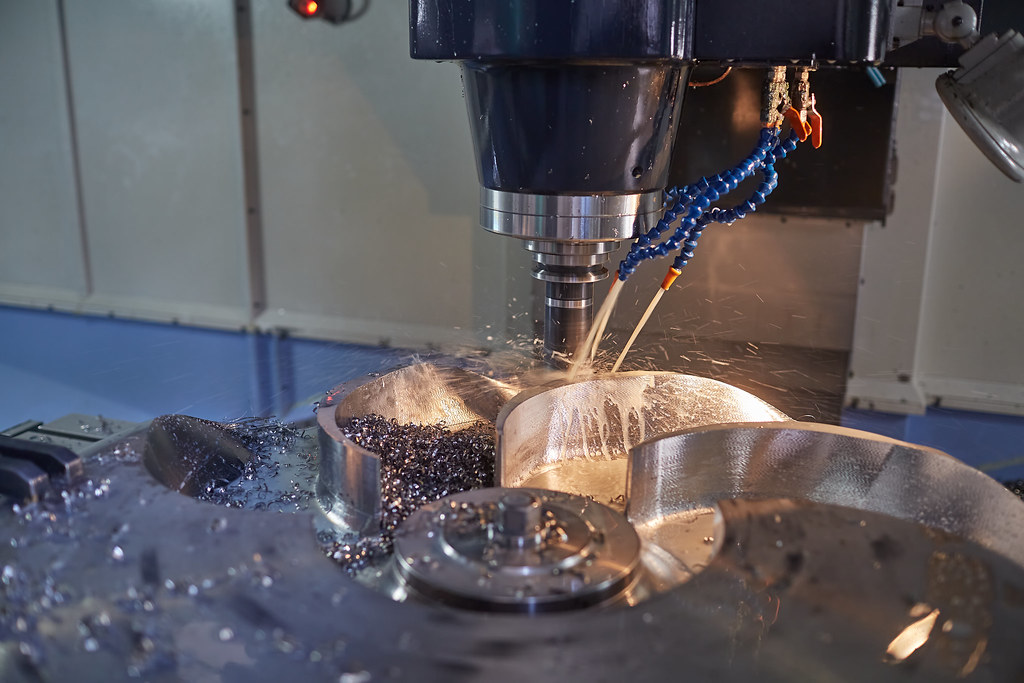
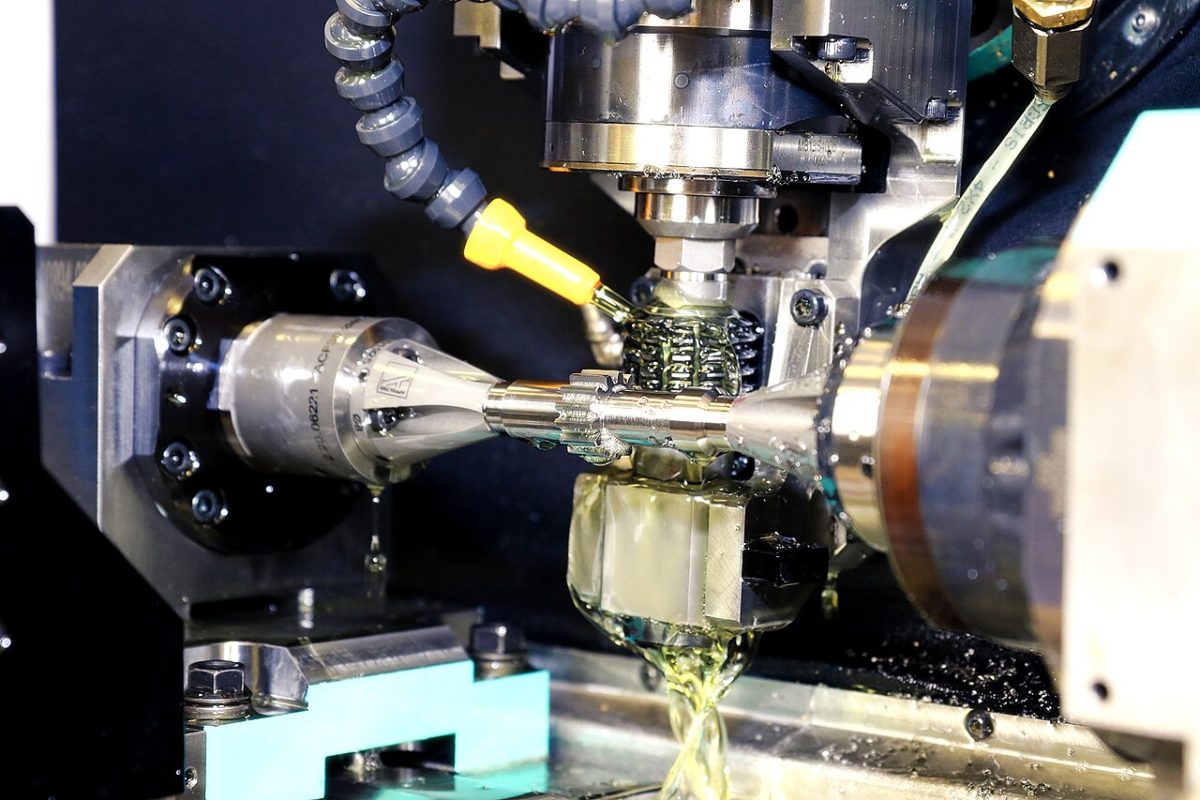
- CNC machining produces implants, instruments, and housings to tight tolerances directly from bar, plate, or near-net forms; multi-axis milling and turning handle complex geometries like bone plates and surgical handpieces.
- Injection molding manufactures polymer components and single-use devices at volume, emphasizing validated processes, controlled resins, and often cleanroom production.
- Casting and forging create near-net shapes in cobalt-chrome and titanium; forging can improve grain structure and fatigue performance for load-bearing parts.
- Additive manufacturing builds porous structures and patient-specific geometries — such as lattice surfaces that encourage bone ingrowth — that are impractical to machine.
- Surface treatment — electropolishing, passivation, anodizing, and coating — finalizes corrosion resistance, cleanliness, and biological behavior.
In practice, a single component often passes through several of these processes in sequence, each a controlled, documented operation.
What Buyers and Engineers Should Verify
When qualifying a manufacturing partner for medical work, a few questions cut to the heart of capability: Is the quality system certified to ISO 13485, or built on a mature ISO 9001 foundation moving toward it? Can the supplier furnish material certifications and full lot traceability as a matter of routine? Are special processes validated, and is metrology calibrated to traceable standards? Can the supplier perform or coordinate electropolishing and passivation to the relevant ASTM specifications? Clear, documented answers signal readiness.
Precision medical manufacturing is ultimately a discipline of control — over materials, dimensions, surfaces, cleanliness, and records — applied consistently across processes. Engineers who understand these requirements design more manufacturable devices, and buyers who ask the right questions build more resilient supply chains.
If you are scoping a medical component program and want to discuss material selection, tolerances, or finishing requirements, MechPart Pro's engineering team can review your drawings and specifications.
Related capabilities
Have a part to make?
Upload your CAD for a detailed quote and free DFM feedback within 24 hours.