Aerospace Parts Manufacturing: What It Really Takes
An aerospace part fails differently. What separates an aerospace-capable shop: full traceability, the hard alloys, multi-axis geometry, and finishes that set fatigue life.

An aerospace part fails differently than a consumer part. When a bracket on a coffee maker cracks, you buy a new coffee maker. When a fitting on an aircraft cracks, the consequences are on a different scale entirely — which is why aerospace machining isn't really about making parts, it's about making paperwork-backed certainty. The chip-cutting is the easy half.
If you're sourcing parts for anything that flies, here's what actually separates an aerospace-capable shop from a general one.
It's traceability before it's tolerance
Aerospace buyers assume tight tolerances — that's table stakes. What they really pay for is the ability to prove, years later, exactly what alloy went into a part, which heat lot it came from, who inspected it, and on what calibrated equipment. Full material traceability and a complete inspection record aren't a nice-to-have here; a part without its paper trail is scrap. This is why material certifications and traceability matter more in aerospace than in any other sector, and why first-article inspection is a hard requirement, not a formality.
The materials are difficult on purpose
Aerospace lives on a strength-to-weight obsession, so the materials are the ones that are miserable to machine: titanium, high-strength aluminum, nickel superalloys, and stainless. They work-harden, they hold heat at the cutting edge, they eat tooling. A shop that's fast on mild steel can be hopeless on titanium.
| Material | Why aerospace uses it |
|---|---|
| Titanium | Strength-to-weight + heat and corrosion resistance — see machining titanium |
| 7075 / 2024 aluminum | High strength, light — structural parts (6061 vs 7075) |
| Nickel superalloys | Hold strength at high temperature — hot-section parts |
| Stainless | Corrosion resistance and strength for fittings and hardware |
Complex geometry means multi-axis
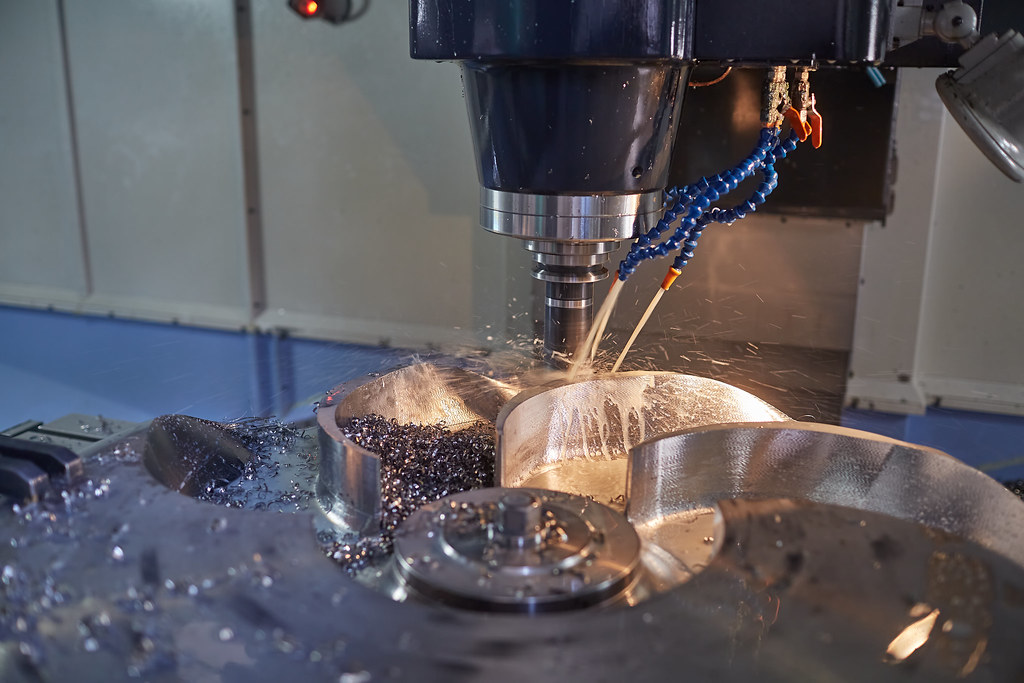
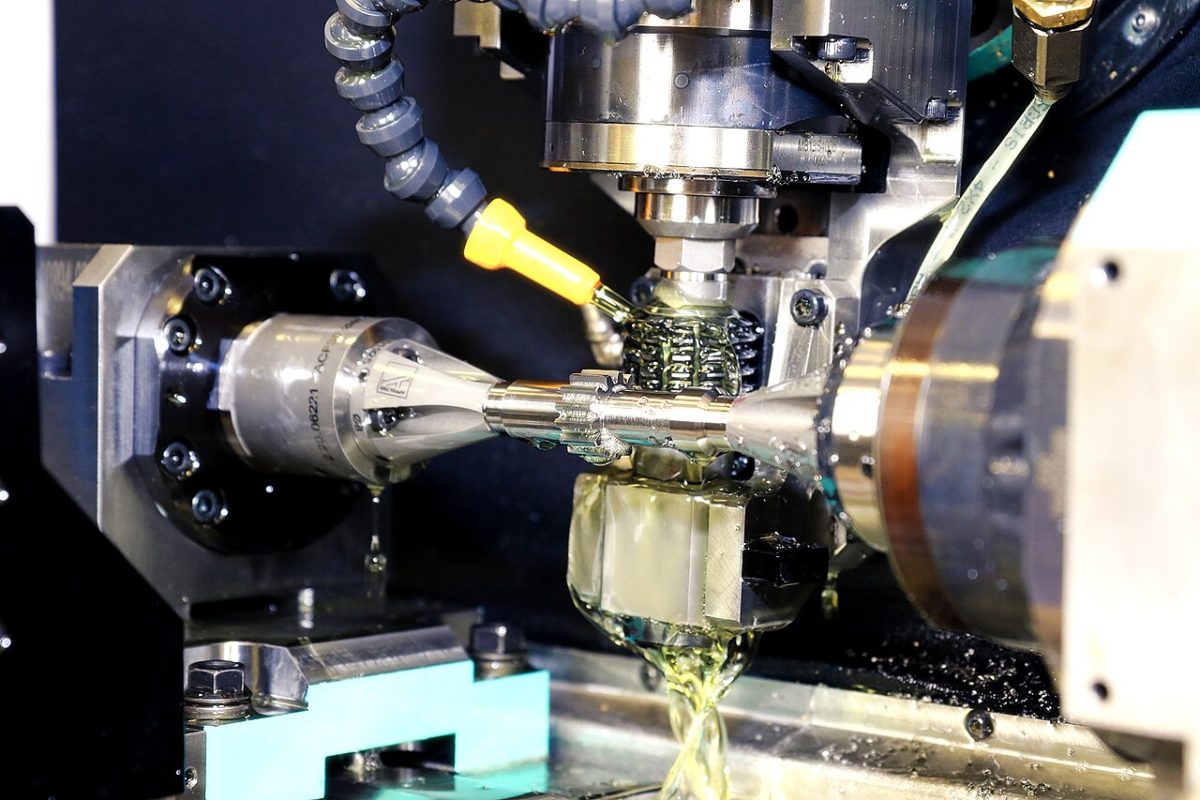
Structural brackets, housings, impellers, manifolds — aerospace parts are rarely simple prismatic blocks. They're organic, thin-walled, and feature-dense, which is exactly the work that 5-axis machining exists for: complex contours in fewer setups, with better accuracy between faces. Small precise hardware and bushings often run on a Swiss lathe instead.
Finishes do real work here
Surface treatment in aerospace isn't cosmetic — it's corrosion protection and fatigue life. Anodizing on aluminum, passivation on stainless, and controlled finishes on fatigue-critical surfaces are specified deliberately. Get the wrong finish and you've compromised the part's service life, not just its looks.
What to look for in a supplier
- A real quality system with documented control plans, not just “we measure stuff.” See what to expect in quality control standards.
- CMM inspection with reports you can keep on file — how CMM inspection works.
- Experience with the hard alloys, not just a willingness to try.
- Full traceability from raw bar to finished part.
We machine flight-adjacent and high-reliability parts in titanium, aerospace aluminum, superalloys and stainless, with full material certs, CMM inspection records and traceability on every job. If you have a structural bracket, housing, or precision fitting that has to be right and has to be provable, send us the drawing and spec — or talk through the requirements with an engineer first. For the machining-side detail, our aerospace precision machining guide goes deeper.
Related capabilities
Have a part to make?
Upload your CAD for a detailed quote and free DFM feedback within 24 hours.