Engineering Plastics for CNC Machining: PEEK, Delrin, Nylon & PTFE
A guide to machining engineering plastics - acetal/Delrin, nylon, PTFE, PEEK, polycarbonate and Ultem - covering properties, machinability, tolerances and where each material fits.

When engineers think of CNC machining they usually picture metal, but a large share of precision machined parts are plastic. Machining is the fastest way to turn a solid block or rod of engineering polymer into a finished part without the cost and lead time of an injection mold — ideal for prototypes, low volumes, large parts, and components that demand tighter tolerances than molding can hold. The catch is that plastics behave nothing like metals under a cutting tool, and choosing the right polymer is half the battle.
This guide surveys the engineering plastics most commonly machined — from everyday acetal to high-performance PEEK — and explains how they differ in strength, temperature resistance, and machinability, plus the techniques that keep plastic parts accurate.
Why Machine Plastic Instead of Molding It?
Injection molding is unbeatable for high volumes, but it carries a large upfront tooling cost and fixed geometry. Machining needs no tooling, so it wins whenever you need parts quickly, in small quantities, in sizes too large to mold economically, or to tolerances a mold cannot reliably hold. It is also the natural route for prototypes that must be made from the same material as the eventual molded production part. For higher volumes, the economics flip toward molding — a transition our injection molding design guide explores.
The Three Tiers of Machinable Plastics
Machinable polymers fall loosely into three performance tiers. Commodity plastics such as acrylic (PMMA), PVC, and the polyolefins (HDPE, UHMW) are inexpensive and easy to cut but limited in strength and heat resistance. Engineering plastics such as acetal (POM/Delrin), nylon, polycarbonate, and ABS offer a strong balance of mechanical properties and machinability for the bulk of industrial parts. High-performance plastics such as PEEK, PEI (Ultem), and PTFE withstand high temperatures and aggressive chemicals, at a significant cost premium.
| Plastic | Tier | Standout Property | Watch Out For | Typical Use |
|---|---|---|---|---|
| Acetal / POM (Delrin) | Engineering | Excellent machinability, stiffness, low friction | Hard to bond; flammable | Gears, bushings, precision parts |
| Nylon (PA6, PA66) | Engineering | Tough, wear-resistant | Absorbs moisture, moves dimensionally | Wear pads, rollers, insulators |
| Polycarbonate (PC) | Engineering | High impact strength, transparent | Scratches; can craze with stress | Guards, transparent fixtures |
| Acrylic (PMMA) | Commodity | Optical clarity | Brittle; chips and cracks | Light pipes, display parts |
| PTFE (Teflon) | High-performance | Lowest friction, chemically inert | Soft, gummy; creeps under load | Seals, insulators, chemical parts |
| UHMW-PE | Commodity | Abrasion resistance, low friction | Soft; high thermal expansion | Wear strips, guides, liners |
| PEEK | High-performance | High strength to ~250°C, chemical resistance | Expensive; needs sharp tooling | Aerospace, medical, semiconductor |
| PEI (Ultem) | High-performance | High heat, flame retardant, strong | Notch-sensitive; costly | Electrical, aerospace interiors |
Why Plastics Are Tricky to Machine
Plastics introduce challenges metals do not, and ignoring them produces parts that are warped, oversized, or melted at the edges.
- Heat sensitivity. Plastics soften and melt at low temperatures and conduct heat poorly, so frictional heat builds at the cutting edge and can smear or gum the surface. Sharp tools and chip clearance matter more than raw speed.
- High thermal expansion. Polymers expand and contract several times more than metals with temperature. A part measured warm from the cut will shrink as it cools, so tolerances must account for it.
- Low stiffness and clamping marks. Plastics deflect under cutting and clamping forces, so light work-holding and good support are essential to avoid distortion and witness marks.
- Internal stress and moisture. Stock can carry residual stress that releases during machining and warps the part; nylon in particular absorbs moisture and changes dimension. Stress-relieving (annealing) before and between operations stabilizes critical parts.
Best Practices for Accurate Plastic Parts
Shops that machine plastics well adapt their approach rather than treating polymer like soft metal:
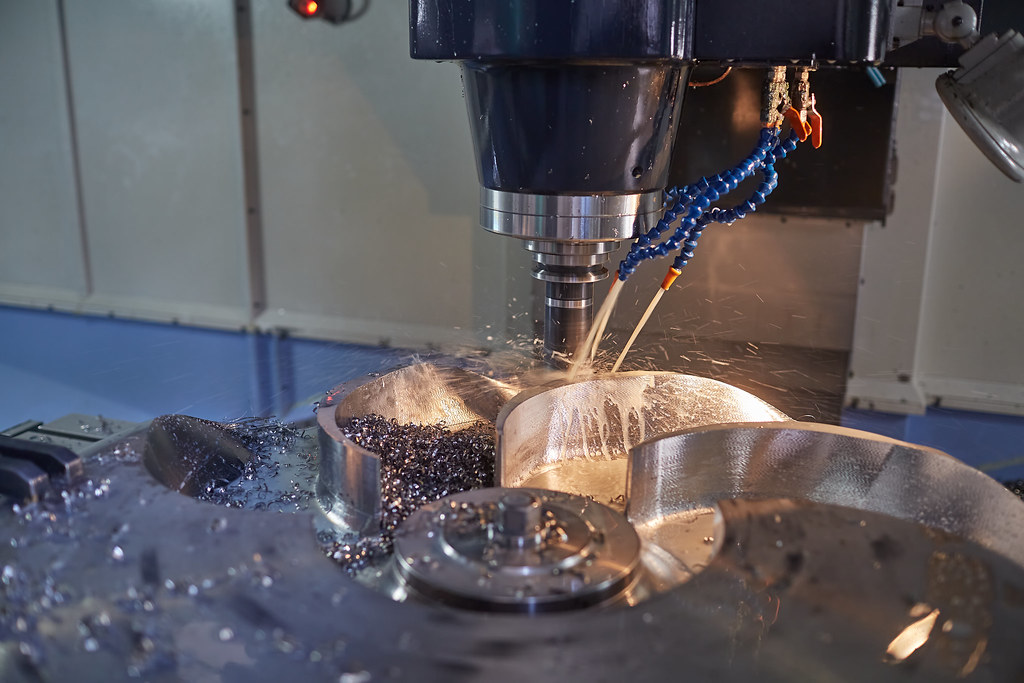
- Use sharp, polished tooling with high positive rake and generous clearance, dedicated to plastics, so the material is sheared cleanly rather than rubbed and melted.
- Favour high spindle speed with controlled feed and keep the tool moving so heat leaves in the chip; avoid dwelling, which melts the surface.
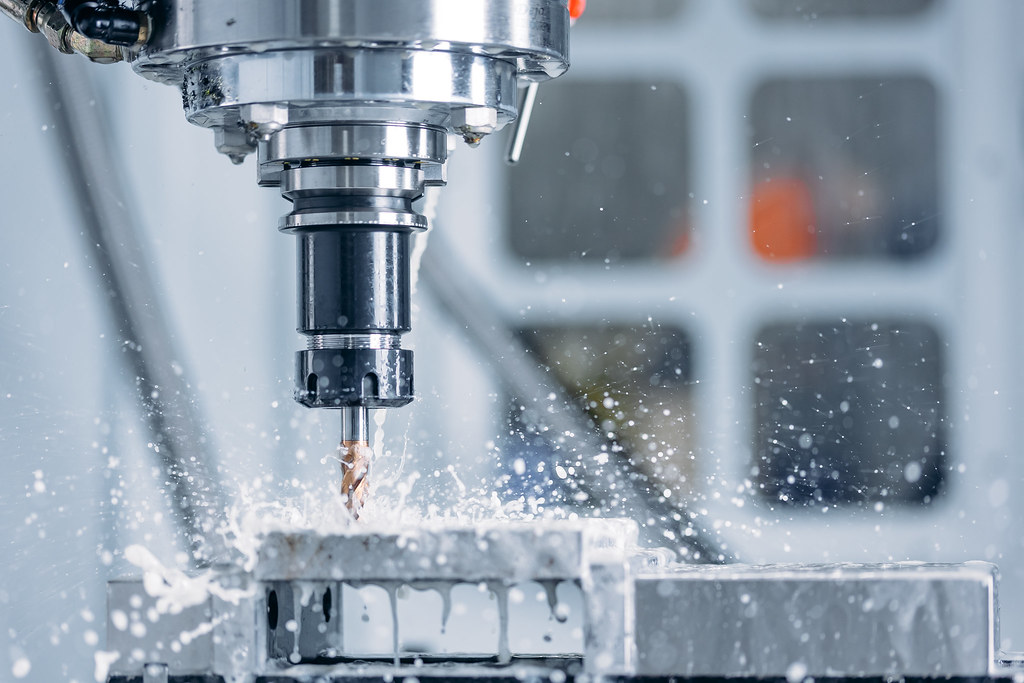
- Clear chips aggressively with air or coolant so they do not re-cut or weld to the part, and use coolant or air blast to manage heat on demanding materials.
- Support and clamp gently, backing thin walls and spreading clamping force to prevent deflection and marks.
- Stress-relieve critical parts by annealing the stock and, for tight-tolerance work, rough-machining, annealing again, then finishing — so the part stays dimensionally stable in service.
- Open tolerances where you can. Because of expansion and deflection, routine plastic tolerances are looser than metal; reserve tight callouts for features that truly need them, in line with our design-for-CNC rules.
Choosing the Right Plastic
Start from the part's hardest requirement and work outward. If it must survive high temperature or harsh chemicals, a high-performance polymer such as PEEK or PEI is justified. If it slides against another surface, low-friction acetal, PTFE, or UHMW shines. If it must be transparent, choose acrylic for clarity or polycarbonate for impact resistance. If it simply needs to be a strong, stable, easily machined general part, acetal is the default that satisfies most designs at a sensible cost. Where metal is genuinely required instead, compare options in our guides to aluminium alloys and stainless steels.
Surface finishing differs from metal too: many plastics are used as-machined, but vapour polishing, flame polishing, and dyeing are available for specific materials and appearances. Our surface finishes guide covers when each makes sense.
Getting Plastic Parts Right the First Time
Machined plastics deliver fast, tool-free precision across prototypes and production — provided the polymer suits the application and the shop respects how plastics cut. The biggest avoidable mistakes are specifying a material that cannot meet the part's temperature or chemical demands, and applying metal-tight tolerances that polymer expansion will not hold.
MechPart Pro machines the full range of engineering and high-performance plastics alongside our metal work, with tooling and stress-relief processes tuned for polymer. If you are unsure which plastic fits your part — or whether your tolerances are realistic for the material — upload your model and drawing for a quote and free manufacturability feedback, and our engineers will recommend a material and call out anything that could compromise the finished part.
Related capabilities
Have a part to make?
Upload your CAD for a detailed quote and free DFM feedback within 24 hours.