Swiss Machining: How Swiss-Type Lathes Make Tiny Precision Parts
How Swiss machining makes small, slender precision parts - the guide bushing, micron tolerances, one-cycle complete machining, and when to choose it over conventional turning.

Some parts are too small, too slender or too precise for an ordinary lathe to hold without flexing — a 2 mm connector pin, a long thin shaft, a tiny bone screw. For these, the answer is Swiss machining. A Swiss-type lathe supports the bar stock right where the cutting happens, so it can turn long, delicate features to micron tolerances at high volume. This guide explains how Swiss machining works, why it is so accurate on small parts, and when to choose it over conventional turning.
How Swiss Machining Works
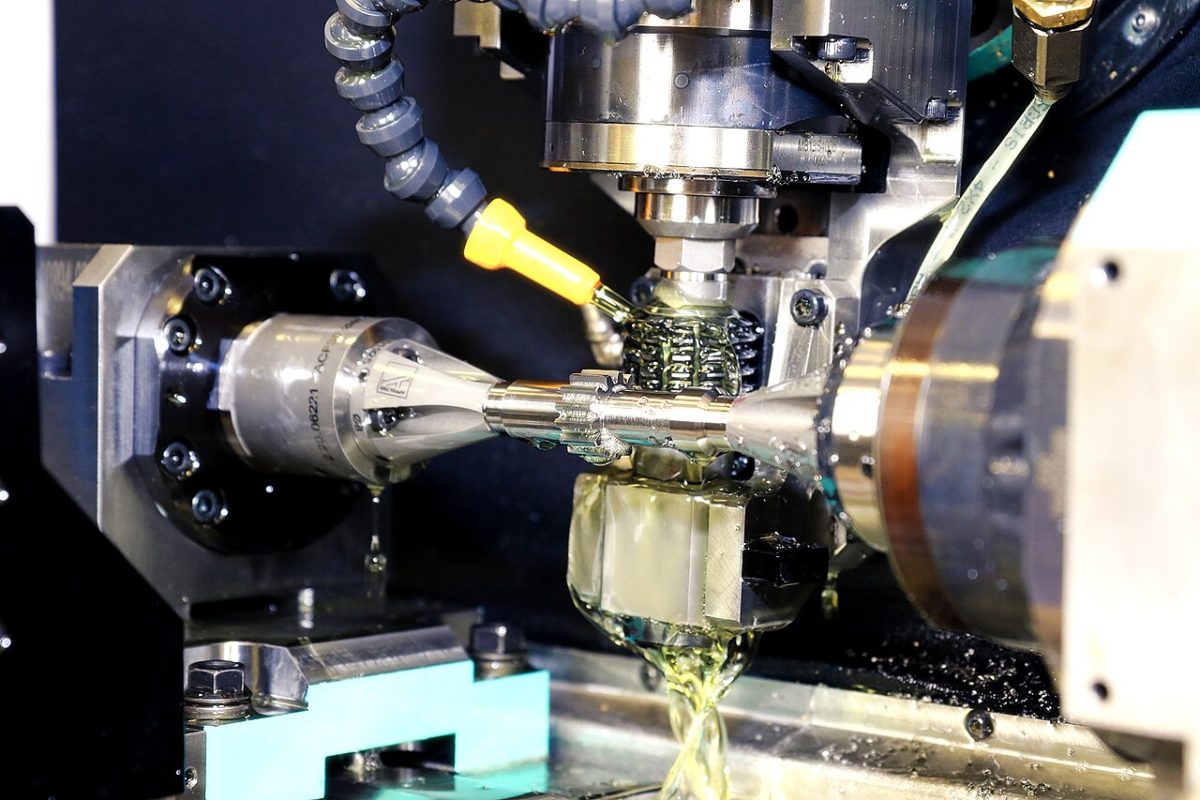
The key difference is the guide bushing. On a conventional lathe the bar is gripped in a chuck and sticks out toward the tool, so long slender parts flex and chatter the further the tool gets from the chuck. A Swiss-type lathe feeds the bar through a guide bushing and the cutting tools work right at the bushing. The headstock slides, advancing the bar through the bushing as material is removed, so the cut always happens within a millimetre or two of rigid support. The part never has an unsupported overhang — which is exactly why it can hold tolerance on long, thin features.
Why It Is So Precise on Small Parts
Because the workpiece is always supported next to the tool, deflection is tiny — so Swiss lathes routinely hold tolerances down to a few microns on slender parts that would whip and taper on a standard lathe. Modern Swiss machines also carry many tools and multiple axes (often with live tooling and a sub-spindle), so they can turn, drill, mill, thread and part off in one continuous cycle. A complex small part can come off the machine complete, with no second setup — which removes the errors that come from re-fixturing and tightens the tolerance further.
Swiss vs Conventional Turning
| Swiss-type lathe | Conventional lathe | |
|---|---|---|
| Support | Guide bushing at the cut — no overhang | Chuck only — part overhangs |
| Best for | Small, long, slender, high-precision parts | Larger, shorter, stubbier parts |
| Tolerance on slender parts | Excellent (microns) | Limited by deflection |
| Complexity in one cycle | High (live tooling, sub-spindle) | Lower |
| Volume | Excellent for high-volume small parts | Good |
Where Swiss Machining Shines
Swiss machining dominates wherever parts are small, precise and made in quantity: medical (bone screws, implants, surgical pins — see medical components), electronics and connectors (contact pins, terminals), aerospace (fasteners, fittings), watchmaking and automotive sensors. If a part is roughly under 32 mm in diameter, has slender or long features, and needs tight tolerances in volume, it is probably a Swiss job. For the broader turning vs milling decision, see our turning vs milling guide.
Designing Parts for Swiss Machining
- Play to its strength: long, slender, round-dominant parts with fine features are ideal — the geometry a standard lathe struggles with.
- Mind the diameter range. Swiss excels on small diameters (often up to ~32 mm); very large parts belong on other machines.
- Combine operations. Design so turning, cross-drilling, milling and threading can happen in one cycle — it cuts cost and improves accuracy.
- Choose a free-machining material where you can — brass, free-machining stainless and aluminium run fast and clean. See our materials guide.
- Specify tolerances where they matter, not everywhere — Swiss can hold microns, but only call for them on the features that need it.
The Bottom Line
Swiss machining solves the problem of holding tolerance on small, slender parts by supporting the stock exactly where the tool cuts. That rigidity, combined with multi-tool machines that finish a part complete in one cycle, makes it the first choice for high-volume precision components in medical, electronics, aerospace and beyond. When a part is small, long or thin and the tolerances are tight, Swiss-type turning is how it gets made accurately and economically.
MechPart Pro runs Swiss-type lathes for small, high-precision turned parts — complete in one cycle, in volume, to micron tolerances — alongside multi-axis milling and turning. Share your drawing and our engineers will tell you whether Swiss machining is the right route as part of our free design-for-manufacturability review. Explore the metals and plastics we turn in our materials guide.
Related capabilities
Have a part to make?
Upload your CAD for a detailed quote and free DFM feedback within 24 hours.