Drone and UAV Components: Where Every Gram Is a Tax
Every gram on a drone is endurance you give away. The strength-to-weight problem behind UAV frames, motor and gimbal mounts, and how vibration becomes a tolerance issue.

On a drone, every gram is a tax you pay on flight time. Add ten grams of unnecessary metal to a frame and you lose endurance on every single flight for the life of the aircraft. That makes commercial and industrial UAV parts a relentless exercise in removing material without losing the stiffness that keeps the airframe from flexing in flight — one of the purest strength-to-weight problems in manufacturing.
Light, but not flimsy
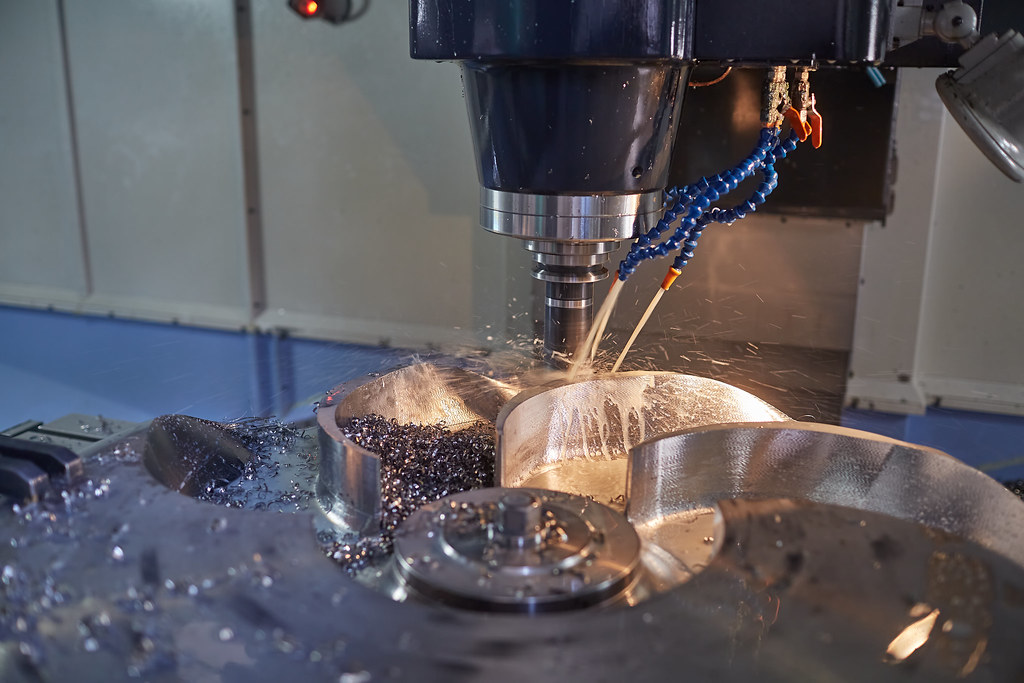
The whole game is high strength-to-weight. UAV parts are machined from aluminum (often 7075 for structure) and increasingly from materials chosen purely for lightness, then pocketed and ribbed to strip out every gram that isn't doing structural work. Thin walls are the norm, which makes them tricky to hold and machine without chatter — the kind of part where workholding and wall thickness decide cost (wall thickness guide, workholding and cost).
The parts that fly
- Frame & arm components — the structural skeleton, light and stiff.
- Motor mounts — precise, rigid, vibration-resistant.
- Gimbal & camera mounts — tight tolerances so the payload stays steady; stable imaging depends on them.
- Landing gear — light but able to take the impact.
- Electronics & battery enclosures — protective, sealed, minimal weight.
Vibration is a tolerance problem
Drones live with constant vibration from spinning motors and props. A gimbal mount that's even slightly off, or a motor mount that lets the motor wander, shows up directly as shaky footage or wasted efficiency. The precision on these interfaces isn't vanity — it's the difference between usable and useless payload data. Critical mating features deserve a real inspection check.
Iterate fast, then scale smart
UAV development is fast and iterative — fly it, crash it, redesign, repeat. That strongly favours no-tooling CNC and rapid prototyping through the development phase, so you can revise frame geometry every week without committing to a mold. When a design freezes and you're building hundreds or thousands of airframes, that's the moment to look at casting structural parts to cut weight and cost — the crossover logic in casting vs machining.
Finishes that earn their weight
Anodizing aluminum frames adds corrosion resistance and a clean look for almost no weight penalty — an easy win. For parts mixing metals, mind galvanic corrosion at fastener joints, which matters for aircraft flown in the wet.
We machine commercial and industrial UAV parts where grams matter and stiffness can't — frames, motor and gimbal mounts, enclosures and landing gear — fast through prototyping and scalable into production. Send your CAD and target weight and we'll help strip mass without losing rigidity, or run it through the Design Check first.
Related capabilities
Have a part to make?
Upload your CAD for a detailed quote and free DFM feedback within 24 hours.