Robotics Parts Manufacturing: Stiff, Light, Precise
A robot is only as repeatable as its weakest joint. The stiffness-vs-weight tradeoff, the parts that recur, and machining to precision only where it actually counts.

A robot is only as repeatable as its weakest joint. You can write perfect motion control, but if the bracket holding a harmonic drive flexes half a millimetre under load, your end effector misses its target every cycle. Robotics is a discipline where mechanical parts quietly decide whether the software ever gets to look good — and that puts unusual pressure on how those parts are made.
Stiffness and weight are fighting each other
Every robotics part lives on a seesaw: it has to be rigid so it doesn't deflect under acceleration, and light so the motors don't waste torque hauling their own structure around. That's why robot arms are full of pocketed, ribbed aluminum — material removed everywhere it isn't carrying load. Machining aluminum like 6061 or 7075 into those skeletal shapes is bread-and-butter robotics work, and getting the wall thicknesses right is a real design exercise (our wall thickness guide covers the limits).
The parts that show up again and again
- Structural arm links & brackets — lightweight, stiff, often anodized aluminum.
- Gearbox and joint housings — precise bores and faces to hold bearings and reducers concentric.
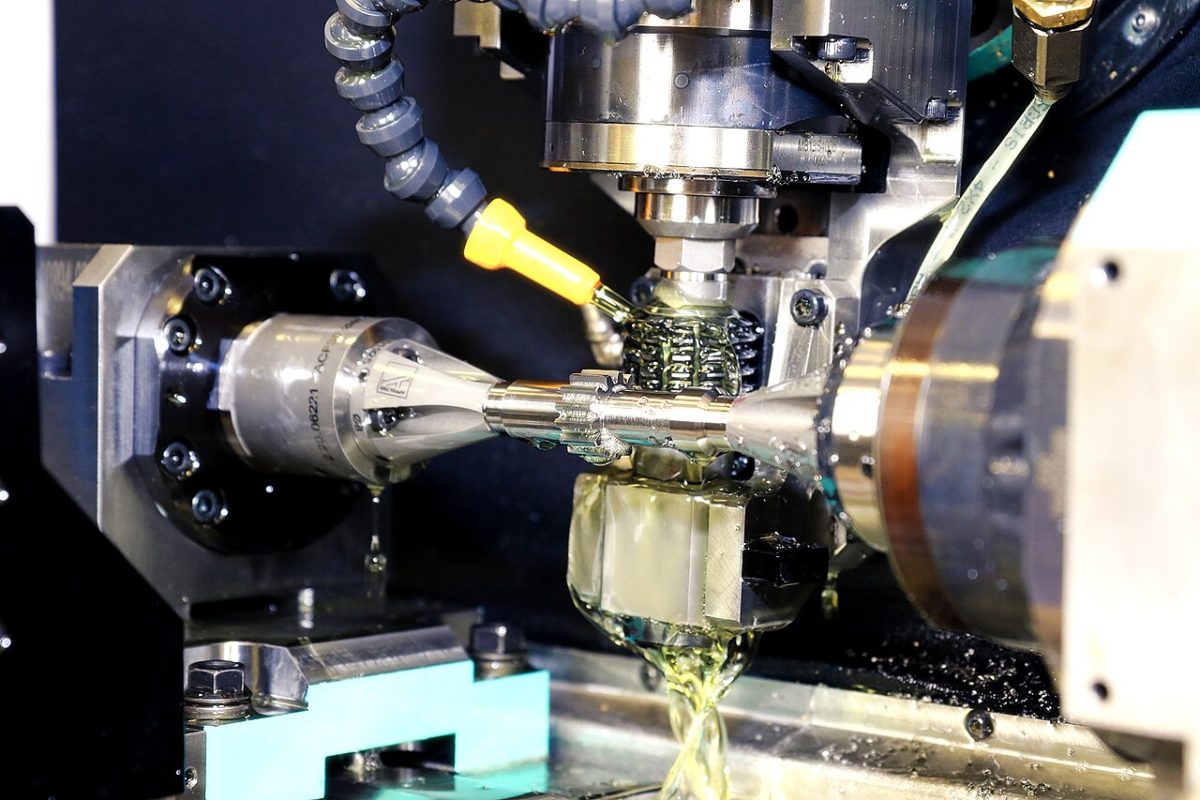
- Precision gears — backlash is the enemy of repeatability; see gear types and manufacturing.
- End-effector and gripper parts — custom, often low-volume, frequently iterated.
- Shafts and mounting plates — turned and milled to tight concentricity.
Tolerances where they count — and only there
The smart robotics part is precise exactly where it mates with a bearing, a gear, or another machined face, and relaxed everywhere else. Over-tighten every dimension and you pay for precision the robot never uses; that trap is exactly what we cover in over-tolerancing. The features that actually matter — bearing bores, gear-mount concentricity, the flatness of a mating face — need genuine control and a CMM check to prove it.
Robotics moves fast — your supplier has to keep up
Robotics and automation programs iterate hard. You'll machine a prototype arm, test it, change three things, and need v2 next week. That favours a no-tooling approach: CNC and rapid prototyping let you revise geometry every iteration without paying for a mold. Once a design freezes and volume climbs, then it's worth looking at casting the structural links to save weight and cost — the tradeoff in casting vs machining.
Don't forget the finish
Anodizing isn't just for looks on a robot arm — hardcoat anodize adds wear resistance on surfaces that see repeated contact, and a clean anodized finish resists corrosion in humid or washdown environments. For parts mixing aluminum and steel fasteners, watch for galvanic corrosion at the joints.
We make robotics and automation parts from one-off prototype links to repeat production of housings, gears and brackets — light where it can be, stiff and precise where it must be, with inspection to back it up. Send your CAD and quantity and we'll turn the first iteration around fast, then scale it with you. Not sure your part is optimised for cost and stiffness? Run it through our Design Check first.
Related capabilities
Have a part to make?
Upload your CAD for a detailed quote and free DFM feedback within 24 hours.