A Practical Guide to Surface Finishes for CNC & Metal Parts
Compare anodizing, plating, passivation, powder coating and more to choose the right surface finish for your custom metal and CNC parts.

Surface finishing is one of the most consequential decisions in custom part production, yet it is often left until the end of a project. The right surface finish can extend service life by years, while the wrong one can cause premature corrosion, poor paint adhesion, or parts that no longer fit their assembly. This guide explains why finishing matters and walks through the most common options for CNC-machined and metal parts, with a comparison table and practical selection guidance for engineers and buyers.
Why Surface Finishing Matters
A finish is far more than cosmetic. For most precision components, it directly affects performance, reliability, and cost. The key drivers behind specifying a finish include:
- Corrosion resistance. Bare steel rusts, aluminum forms uneven oxide, and many alloys degrade in humid, salty, or chemically aggressive environments. Finishes such as passivation, plating, anodizing, and powder coating create a protective barrier or a stable oxide layer that slows or stops corrosion.
- Wear and hardness. Processes like hardcoat anodizing and hard chrome plating dramatically increase surface hardness, reducing abrasion, galling, and friction on moving parts.
- Aesthetics. Color, gloss, and texture matter for consumer-facing products and branded enclosures. Bead blasting, brushing, and anodizing offer controlled, repeatable appearances.
- Electrical conductivity. Some finishes insulate (standard anodizing), while others enhance conductivity (silver or gold plating, chromate conversion coatings used for grounding).
- Dimensional impact. Every coating either adds or removes material. This is critical on tight-tolerance features and is discussed throughout below.
Starting Point: As-Machined and Ra Values
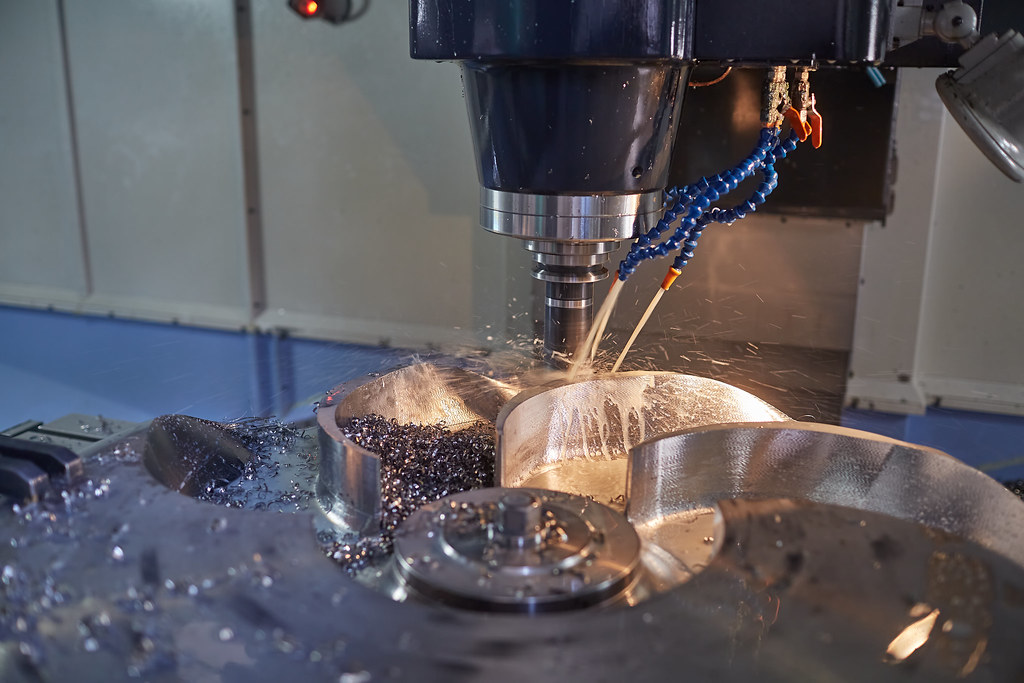
Before adding any coating, it is worth defining the as-machined condition. CNC parts leave the machine with visible tool marks, and their roughness is specified using Ra (arithmetic average roughness), typically in micrometers (µm) or microinches.
A standard as-machined finish is commonly around Ra 3.2 µm (125 µin). Finer finishes of Ra 1.6 µm or Ra 0.8 µm require slower feeds, sharper tooling, and additional passes, increasing cost. Specifying a smoother finish than the function requires is a frequent source of unnecessary expense. Many secondary finishes also depend on the starting roughness, so the as-machined state and final finish should be considered together.
Mechanical Finishes: Bead Blasting and Brushing
Bead Blasting
Bead blasting propels fine glass beads or aluminum oxide media at the surface, producing a uniform matte, satin texture that hides machining marks. It is widely used on aluminum and stainless steel for a clean, professional appearance. The finish is cosmetic and provides little corrosion protection on its own, so it is frequently followed by anodizing or passivation. Blasting has a minor effect on dimensions and is not recommended for surfaces with very tight tolerances unless masked.
Brushing
Brushing uses abrasive belts or pads to create fine, parallel grain lines, giving the familiar directional satin look seen on appliances and consumer electronics. It is decorative, helps blend out minor surface defects, and is often combined with a protective coating afterward.
Anodizing: Type II vs Type III Hardcoat
Anodizing is an electrochemical process that converts the surface of aluminum into a hard, integral aluminum-oxide layer. Because the oxide grows from the base metal rather than sitting on top of it, anodizing is durable and well-bonded. Two types dominate industrial work:
- Type II (sulfuric acid anodizing). Produces a thinner oxide layer, generally up to around 25 µm. It accepts a wide range of dye colors, offers good corrosion and moderate wear resistance, and is the standard choice for consumer products and general-purpose aluminum parts.
- Type III (hardcoat anodizing). A thicker, denser layer, often 25–50 µm or more, built for demanding wear and abrasion resistance. Hardcoat is typically dark gray to black, with limited color options, and is specified for industrial, military, and high-wear components.
Anodizing grows partly into and partly out of the surface, so it has a measurable dimensional effect, roughly half the coating thickness added per surface. Critical features should be masked or accounted for in the tolerance stack. Note that the anodic layer is electrically insulating.
Electroplating: Zinc, Nickel, and Chrome
Electroplating deposits a thin metal layer onto a conductive part using an electric current. It is one of the most versatile families of metal finishing, used on steel, brass, and other base metals for corrosion protection, wear resistance, conductivity, or appearance.
- Zinc plating. An economical sacrificial coating for steel that corrodes preferentially to protect the base metal. It is usually sealed with a chromate conversion coating for added protection and is common on fasteners and brackets.
- Nickel plating. Provides excellent corrosion and wear resistance with a bright or satin finish. Electroless nickel, deposited chemically without current, offers exceptionally uniform thickness even on complex geometries and internal features.
- Chrome plating. Decorative chrome gives a bright, reflective finish over a nickel underlayer. Hard chrome, applied in thicker layers, delivers outstanding hardness and wear resistance for hydraulic rods, shafts, and tooling.
All plating adds material, so the deposit thickness must be included in dimensional planning for fitted surfaces and threads.
Passivation for Stainless Steel
Passivation is a chemical treatment, typically using nitric or citric acid, that removes free iron and other contaminants from the surface of stainless steel. This allows a clean, chromium-rich passive oxide layer to form and self-heal, maximizing the alloy's natural corrosion resistance. Passivation removes essentially no measurable material and changes neither dimensions nor appearance, making it ideal for medical, food, and marine stainless parts where it is often a specification requirement (commonly per ASTM A967 or AMS 2700).
Black Oxide
Black oxide is a chemical conversion coating that forms a black magnetite layer on steel and stainless steel. It adds almost no dimensional change, which makes it attractive for precision parts, gears, and tooling where appearance and mild corrosion resistance are needed without affecting fit. Its corrosion protection is modest and is greatly improved when sealed with oil or wax. It also reduces glare, a benefit on optical and firearm components.
Powder Coating
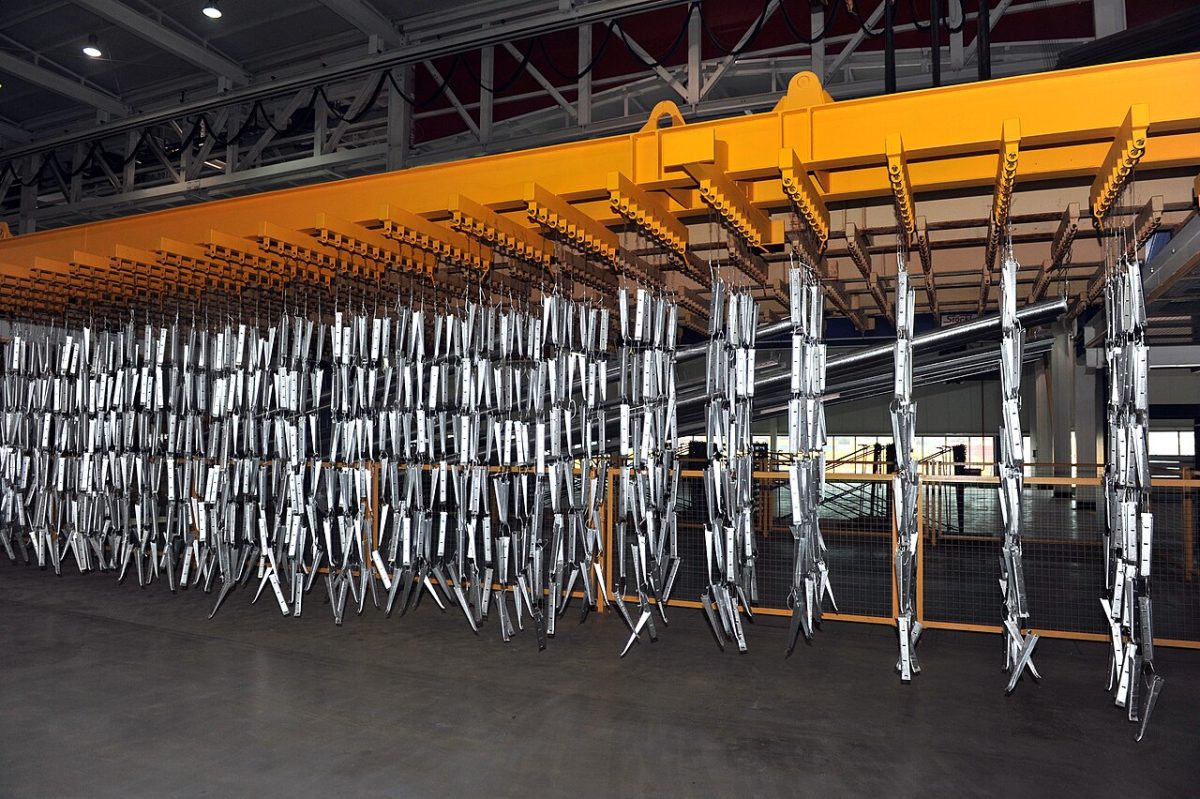
Powder coating applies a dry polymer powder electrostatically, which is then cured under heat to form a tough, uniform film. It produces a thick, durable, attractive finish in a huge range of colors and textures, with excellent corrosion and chip resistance. Typical film thickness is far greater than plating or anodizing, often 50–150 µm, so it is not suitable for tight-tolerance mating surfaces, fine threads, or sharp edges where coverage can be inconsistent. It is a popular, environmentally friendly choice for enclosures, frames, brackets, and outdoor equipment.
Electropolishing
Electropolishing is essentially the reverse of electroplating: an electrochemical process that removes a thin, controlled layer of material, preferentially dissolving microscopic peaks. The result is an exceptionally smooth, bright, deburred surface that lowers Ra, improves cleanability, and enhances corrosion resistance on stainless steel. It is widely used in medical, pharmaceutical, semiconductor, and food-processing applications. Because it removes material, it has a slight dimensional effect that should be accounted for on precision features.
Chromate Conversion and Dacromet
Chromate conversion coatings (also called chem film or by the trade name Alodine) form a thin protective layer on aluminum that resists corrosion while remaining electrically conductive, making it valuable for grounding and as a paint primer. It adds negligible thickness. Dacromet is a proprietary zinc-aluminum flake coating that provides high corrosion resistance for fasteners and automotive hardware, and is valued as a chromium-free, hydrogen-embrittlement-free alternative to traditional zinc plating on high-strength steel.
Surface Finish Comparison Table
| Finish | Common Materials | Key Benefit | Typical Use | Cost Level |
|---|---|---|---|---|
| Bead Blasting | Aluminum, stainless steel | Uniform matte cosmetic texture | Enclosures, visible parts | Low |
| Brushing | Aluminum, stainless steel | Decorative directional grain | Consumer electronics, trim | Low |
| Anodizing Type II | Aluminum | Corrosion resistance + color | General aluminum products | Low–Medium |
| Anodizing Type III (Hardcoat) | Aluminum | High wear and hardness | Industrial, military parts | Medium |
| Zinc Plating | Steel | Economical sacrificial protection | Fasteners, brackets | Low |
| Nickel Plating | Steel, brass | Corrosion + wear, even coverage | Connectors, hardware | Medium |
| Chrome Plating | Steel | Hardness or bright finish | Shafts, decorative parts | Medium–High |
| Passivation | Stainless steel | Maximizes natural corrosion resistance | Medical, food, marine | Low |
| Black Oxide | Steel, stainless steel | No dimensional change, low glare | Tools, gears, optics | Low |
| Powder Coating | Steel, aluminum | Thick, durable, colorful film | Frames, outdoor equipment | Low–Medium |
| Electropolishing | Stainless steel | Ultra-smooth, cleanable surface | Medical, semiconductor | Medium |
| Chromate / Dacromet | Aluminum / steel | Conductive or high-corrosion protection | Grounding, fasteners | Low–Medium |
How to Select the Right Finish
With so many options, a structured approach prevents costly mistakes. Work through these questions in order:
- Define the operating environment. Indoor, outdoor, marine, chemical, or high-temperature conditions narrow the field quickly. Salt-spray exposure points toward zinc, Dacromet, or powder coating; sterile environments favor passivation or electropolishing.
- Match the finish to the base material. Anodizing is for aluminum, passivation and electropolishing are for stainless steel, and black oxide and most plating are for steel. The alloy often dictates the shortlist.
- Prioritize function over appearance. Decide whether the primary need is corrosion resistance, wear resistance, conductivity, or cosmetics, then weight the cosmetic finish accordingly.
- Account for dimensional impact. On tight-tolerance features and threads, prefer finishes that add little material, such as passivation, black oxide, or chromate, or specify masking and adjust dimensions for thicker coatings like powder coat and hardcoat.
- Balance cost and volume. Simple mechanical and chemical finishes are economical at any quantity; specialized plating and hardcoat carry higher setup and per-part costs. Confirm any required industry standards early.
Finally, involve your manufacturing partner before the design is frozen. Early discussion of finish, masking, and tolerances avoids rework and ensures the chosen process is compatible with the part geometry.
Get Expert Finishing Support
Choosing and applying the right finish is where engineering judgment meets process expertise. As an ISO 9001 certified manufacturer, MechPart Pro supports CNC machining, casting, forging, and molding with a full range of surface treatments and global delivery to over 40 countries. If you are weighing finishing options for a custom part, our engineering team can recommend the best approach for your application and specifications.
Related capabilities
Have a part to make?
Upload your CAD for a detailed quote and free DFM feedback within 24 hours.