Pump and Valve Components: The Tolerance You Cannot See
A valve seat a hair off seals at zero pressure and weeps at full. Why pump and valve parts come down to a machined surface being exactly right.

Pumps and valves are where precision machining meets fluid physics. The whole job of these parts is to control or move a fluid without leaking, without wearing out, and often against pressure or corrosion — and every one of those goals comes down to a machined surface being right. A valve seat that's a hair off seals at zero pressure and weeps at full pressure. The tolerance you can't see is the one that leaks.
Sealing surfaces are the whole game
A valve's job is to seal, and a pump's job is to move fluid with tight internal clearances. Both live or die on machined surfaces: valve seats, sealing faces, bores, and the clearances between rotating and stationary parts. These features need real surface finish and dimensional control — a rough or out-of-round seat leaks, and a sloppy clearance kills pump efficiency. Surface finish here is a sealing spec (surface roughness Ra/Rz), and O-ring grooves have to be dimensioned correctly to actually seal (O-ring groove design).
Material follows the fluid
What's flowing through decides the metal. Clean water is forgiving; corrosive chemicals, brine, or abrasive slurries are not. So pump and valve parts span a wide material range — from standard stainless for general service to corrosion-resistant grades for aggressive media, plus bronze and brass for their corrosion resistance and bearing qualities.
| Service | Typical material |
|---|---|
| General / water | Stainless, brass, bronze |
| Corrosive media | 316/duplex stainless, special alloys — grades compared |
| Bearing / wear surfaces | Bronze, hardened steel — machining bronze |
Stainless parts get passivated to hold their corrosion resistance (passivation), and wear surfaces are often hardened and verified (hardness testing).
Threads and pressure
Valves and pumps are full of threaded connections that have to hold pressure without leaking — cleanly cut threads are not optional (thread tapping guide). On pressure-containing bodies, the wall sections and sealing faces are checked carefully, because a leak under pressure is the failure everyone's trying to avoid.
Bodies: cast then machined
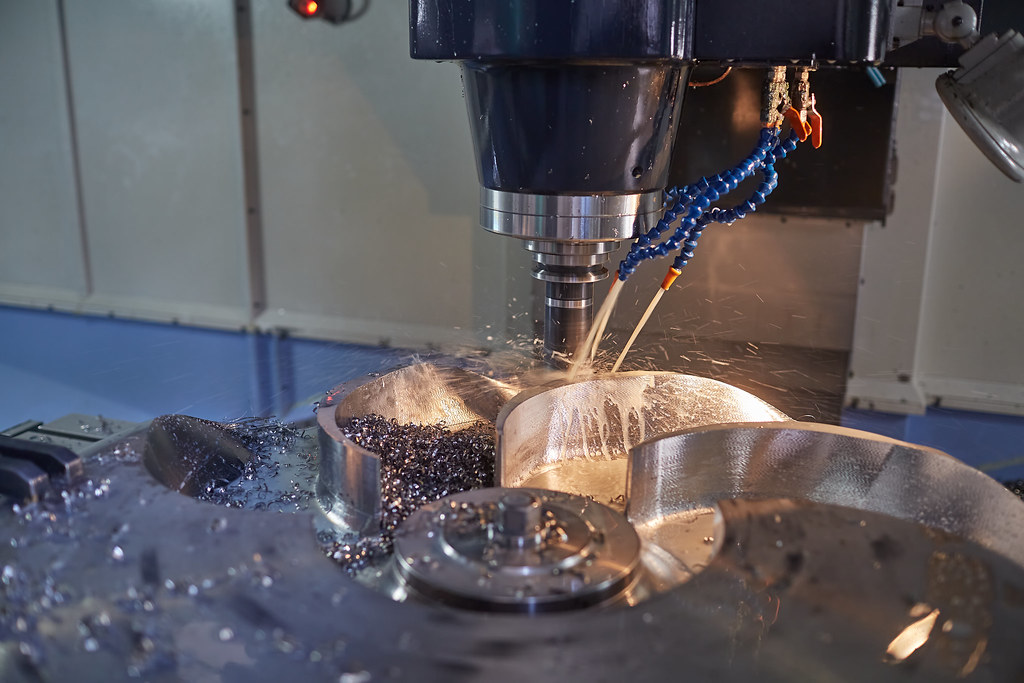
Valve and pump bodies are complex shapes with internal passages — classic candidates for casting the bulk form and machining only the seats, faces and threads to tolerance. That hybrid keeps cost reasonable on intricate geometry while putting precision exactly where the part seals (casting vs machining). For impellers and complex internals, multi-axis machining handles the contours (5-axis machining).
We machine pump and valve parts where sealing is everything — valve seats, bodies, impellers, shafts and fittings — in the right material for your fluid, with the surface finish, threads and clearances that hold pressure and keep efficiency up. Send your drawings and the service conditions (fluid, pressure, temperature) and we'll match material and finish to the job, or talk through a sealing-critical part first.
Related capabilities
Have a part to make?
Upload your CAD for a detailed quote and free DFM feedback within 24 hours.