Hydraulic and Pneumatic Components: Sealed Under Pressure
All that force is contained by machined surfaces and seals at pressure. Why bore finish and sealing decide whether a cylinder lasts or leaks.

Hydraulics and pneumatics are how machines get strong. A small electric signal opens a valve, and suddenly a cylinder is pushing tons. But all that force is contained by machined surfaces and seals working at pressure — and the moment one of those surfaces is rough, scored, or out of round, you get a leak, a loss of force, or a seal that shreds itself in weeks. Fluid power is unforgiving about surface quality in a way few other fields are.
The bore finish is everything
Inside a hydraulic cylinder, a piston seal slides back and forth thousands of times against the bore wall. If that wall is too rough it tears the seal; too smooth and it can't hold a lubricating film — there's a real window the finish has to land in. Honed bores, controlled surface finish, and tight roundness are what make a cylinder last instead of leak (surface roughness Ra/Rz). This is precision where you can feel the difference between a good part and a bad one.
Sealing, sealing, sealing
Fluid power is a sealing discipline end to end. O-ring grooves have to be dimensioned exactly or they extrude and fail under pressure (O-ring groove design); ports and fittings rely on cleanly cut threads to stay leak-tight (thread tapping guide). A high-pressure leak isn't a drip — it's lost force, contamination, and a safety issue.
The parts
| Part | What's critical |
|---|---|
| Cylinder bodies & bores | Honed finish, roundness, straightness |
| Pistons & rods | Surface finish, hardness, straightness |
| Valve bodies & spools | Tight clearances, clean ports |
| Manifolds | Cross-drilled passages, sealed ports |
| Fittings & adapters | Clean threads, sealing faces |
Hard, wear-resistant surfaces
Rods and spools slide constantly and have to resist wear and the corrosion that pits a surface and then kills the seal riding over it. They're often hardened (heat treating steel) and plated — hard chrome and similar coatings give the smooth, hard, corrosion-resistant surface a moving rod needs. Choosing that coating is part of the design (finish and plating options).
Manifolds are deceptively hard
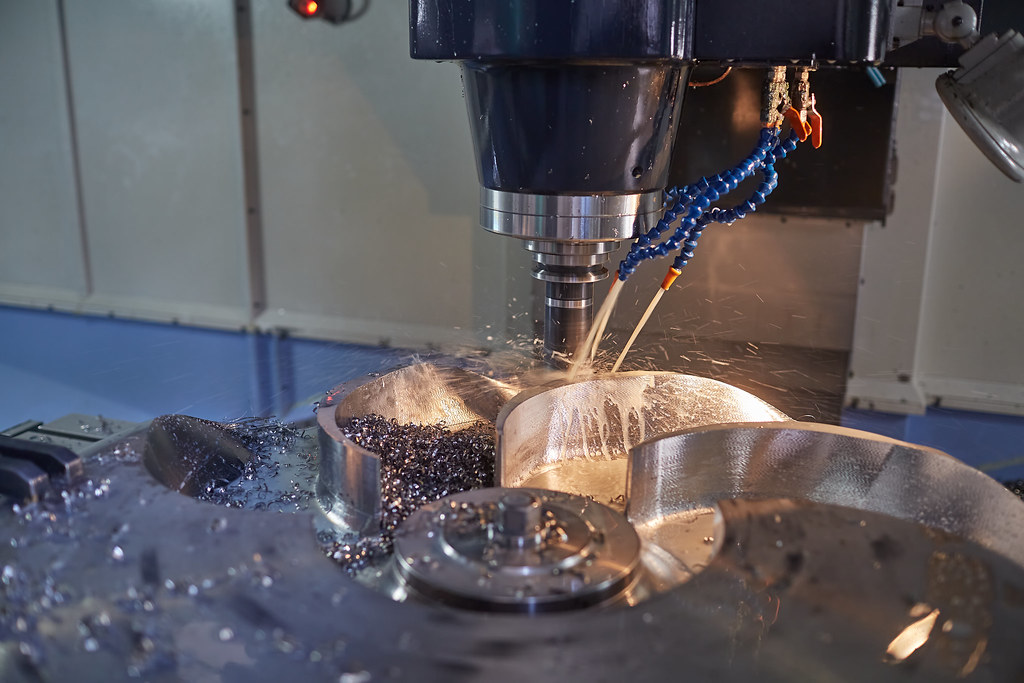
A hydraulic manifold is a solid block with a maze of cross-drilled internal passages that must intersect cleanly, deburr fully (a burr inside a passage becomes debris that wrecks a valve), and seal at every port. They look simple and machine hard — internal deburring especially (deburring methods).
We machine hydraulic and pneumatic parts where surface finish and sealing are the whole job — honed cylinder bores, hardened and plated rods, valve bodies with tight clearances, and cross-drilled manifolds deburred clean. Send your drawings and working pressure and we'll machine and finish to hold it leak-free, or talk through a fluid-power part first.
Related capabilities
Have a part to make?
Upload your CAD for a detailed quote and free DFM feedback within 24 hours.