Casting Defects: Porosity, Shrinkage, Cold Shuts and How to Prevent Them
A guide to common casting defects - gas and shrinkage porosity, cold shuts, misruns, inclusions and hot tears - their causes and the design and process fixes that prevent them.

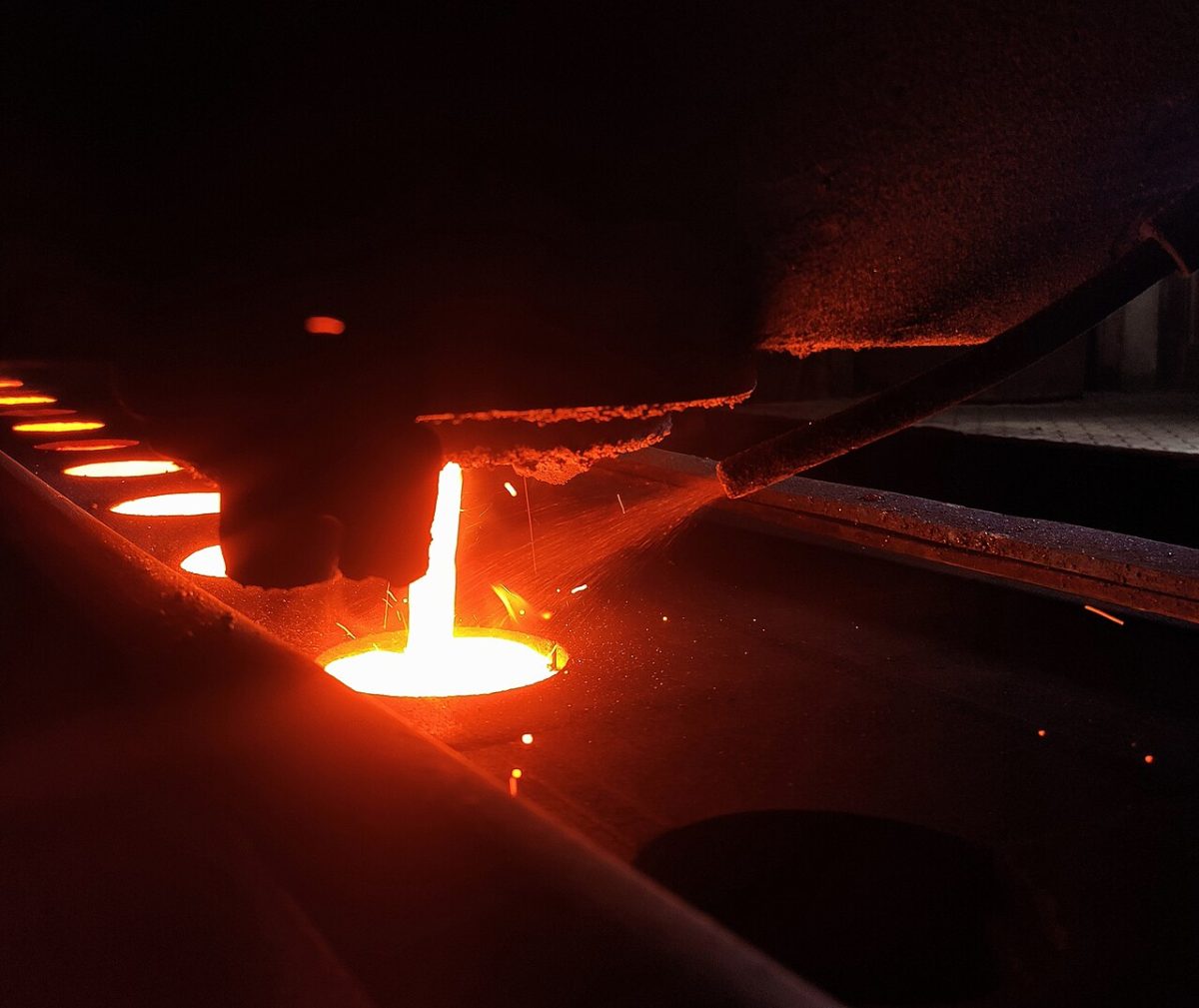
Casting turns molten metal into a finished shape in one step — but a lot can go wrong as that metal fills the mould and freezes. Casting defects like porosity, shrinkage, cold shuts and inclusions are the result, and they can mean a part that leaks, fails under load or simply gets scrapped. Most are predictable and preventable once you understand what causes them. This guide walks through the common casting defects, why they happen, and the design and process choices that keep them out of your parts.
Gas Porosity
Gas porosity shows up as small rounded holes scattered through the casting, caused by gas trapped in the metal as it solidifies — from dissolved gases, moisture, or air entrained during pouring. It weakens the part and can cause leaks in pressure-tight components. Prevention comes from degassing the melt, keeping moulds and metal dry, controlling pouring so air isn’t whipped in, and venting the mould so gas can escape.
Shrinkage Porosity
Metal shrinks as it cools and freezes, and if there isn’t enough molten feed metal to fill the gap, you get shrinkage porosity — jagged voids, usually in the last and thickest regions to solidify. The fix is in the design and gating: keep wall sections as uniform as possible, avoid heavy isolated masses, add fillets, and use risers and chills so the casting solidifies progressively toward a feed source. Uniform wall thickness is the single biggest lever.
Cold Shut and Misrun
A cold shut is a weak seam where two streams of metal meet but are too cool to fuse; a misrun is an incompletely filled casting where the metal froze before reaching the end. Both come from metal that is too cold, poured too slowly, or a section too thin to fill. Prevent them by raising pouring temperature, improving gating and flow, and respecting the minimum wall thickness the process and alloy can fill.
Inclusions and Blowholes
Inclusions are foreign particles — sand, slag, oxides — trapped in the metal, creating hard spots and weak points. Blowholes are larger gas cavities, often near the surface. Clean melt practice, proper skimming, good mould preparation and filtration in the gating system keep both out.
Hot Tears
Hot tears are cracks that form while the casting is still hot and weak, as it contracts but is restrained by the mould or by its own geometry. Sharp internal corners and abrupt section changes concentrate that stress. Generous fillets, gradual transitions and a mould that allows the casting to contract prevent tearing.
Defect, Cause and Fix at a Glance
| Defect | Main cause | Key prevention |
|---|---|---|
| Gas porosity | Trapped/dissolved gas | Degas, dry moulds, vent, controlled pour |
| Shrinkage porosity | No feed metal to thick spots | Uniform walls, risers, chills, fillets |
| Cold shut / misrun | Metal too cold / too thin | Higher temp, better gating, min wall |
| Inclusions | Sand, slag, oxides | Clean melt, skim, filter |
| Hot tears | Restrained contraction | Fillets, gradual sections |
Designing Castings That Come Out Clean
- Keep wall thickness uniform. Heavy isolated sections are where shrinkage hides — balance the sections so the part solidifies evenly.
- Add generous fillets at every internal corner to cut stress concentration and hot tearing.
- Allow for feeding. Design so risers and gates can reach the thick regions; taper sections toward the feed.
- Choose the right process. Investment, sand and die casting each suit different sizes, finishes and volumes — see investment vs sand casting and die vs sand casting.
- Specify inspection for critical parts. X-ray or dye-penetrant testing catches internal porosity and surface cracks before parts ship.
The Bottom Line
Casting defects are not bad luck — they are the visible result of how the metal filled and froze. Gas and shrinkage porosity, cold shuts, inclusions and hot tears each trace back to temperature, feeding, cleanliness or geometry, and each has a known fix. Design for uniform walls and generous fillets, choose the right process and alloy, and control the melt and the pour, and the casting comes out sound instead of scrap. Casting and forging compare differently here — see casting vs forging.
MechPart Pro casts to sound, inspected quality — with degassing, controlled gating and risering, and X-ray or dye-penetrant inspection on critical parts — and our engineers will review your part for porosity, shrinkage and tearing risk as part of our free design-for-manufacturability review. Explore the alloys in our materials guide.
Related capabilities
Have a part to make?
Upload your CAD for a detailed quote and free DFM feedback within 24 hours.