Forging Processes Explained: Open-Die, Closed-Die & More
A clear guide to open-die, closed-die, rolled ring and cold/hot forging, including grain-flow benefits, materials, tolerances and a comparison table.

Forging is one of the oldest metalworking methods still central to modern manufacturing, and for good reason. By shaping metal under compressive force rather than cutting it away or pouring it as a liquid, forging produces parts with superior mechanical integrity. For engineers specifying load-bearing components and procurement buyers sourcing them, understanding how the major forging processes differ is essential to balancing performance, cost, and lead time. This guide explains the principal forging methods, the metallurgical reasons forgings outperform alternatives, and how to choose the right approach for a given application.
What Forging Is and Why It Matters
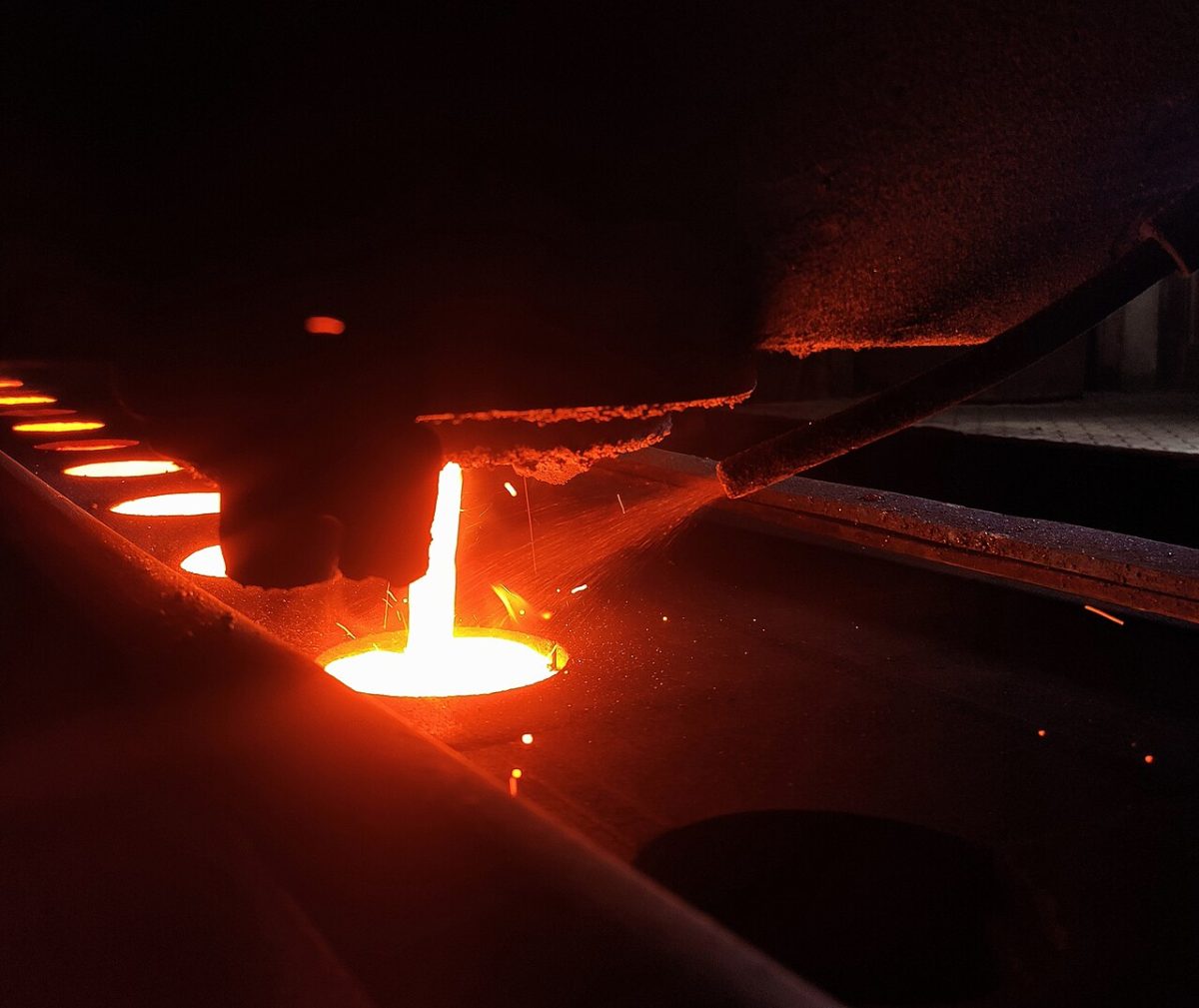
Forging is the process of shaping metal using localized compressive forces, typically delivered by a hammer or a hydraulic or mechanical press. The metal, often heated to a temperature where it becomes more plastic, is deformed between dies until it takes the desired form. Unlike casting, where molten metal solidifies in a mold, forging works the metal in a solid state. Unlike machining a part from bar stock, forging shapes the material rather than removing it.
The result is a part with a refined, oriented internal grain structure and minimal internal porosity. This is why forged components dominate in applications where failure is not an option: crankshafts, connecting rods, turbine discs, aerospace structural fittings, hand tools, and high-pressure flanges and valve bodies.
The Main Forging Processes
Open-Die Forging
In open-die forging, also called smith forging, the workpiece is compressed between flat or simply contoured dies that do not fully enclose the metal. Because the dies do not surround the part, the material flows laterally and the operator (or programmed press) manipulates the workpiece between strikes to progressively achieve the shape.
Open-die forging is well suited to large, relatively simple geometries such as shafts, blocks, discs, rings, and cylinders, and is frequently used for very large components weighing from a few kilograms up to many tonnes. Its key advantages are low tooling cost, flexibility for one-off or low-volume work, and the ability to produce a strong, refined grain structure in massive sections. The trade-offs are looser dimensional tolerances, more generous machining stock, and lower throughput, since shaping depends heavily on skilled manipulation.
Closed-Die (Impression-Die) Forging
Closed-die forging, often called impression-die forging, presses heated metal into dies that contain a cavity shaped like the finished part. As the dies close, the metal fills the impression and any excess is squeezed out into a thin band called flash, which is later trimmed away. Because the cavity constrains the metal, this process produces parts that are far closer to net shape than open-die work.
This method is the workhorse for medium-volume to high-volume production of complex, high-strength parts with consistent geometry, such as automotive connecting rods, steering knuckles, gears, and wrenches. The advantages are good repeatability, tighter tolerances, and excellent strength-to-weight performance. The main drawbacks are higher tooling cost and the lead time required to design and manufacture the dies, which makes the process most economical when those costs are amortized across a production run.
Seamless Rolled Ring Forging
Seamless rolled ring forging starts with a pierced, donut-shaped preform that is rotated and rolled between a driven roll and an idler roll. As the rolling reduces the wall thickness, the ring's diameter grows. The result is a seamless ring with a circumferential grain flow that follows the contour of the part.
This continuous grain orientation gives rolled rings excellent resistance to fatigue and pressure, which is why they are used for bearing races, gear blanks, flanges, and the casings of jet engines, gas turbines, and wind turbine drivetrains. Ring diameters can range from a few centimeters to several meters.
Hot, Warm, and Cold Forging
Forging processes are also categorized by the temperature of the workpiece relative to the metal's recrystallization temperature:
- Hot forging is performed above the recrystallization temperature. The metal is highly plastic, so forces are lower and complex shapes are achievable, but tolerances are looser due to thermal contraction and scale formation. This is the most common approach for steel.
- Warm forging occurs at intermediate temperatures. It offers a useful compromise: better dimensional control and surface finish than hot forging, with lower forming forces than cold forging.
- Cold forging is carried out at or near room temperature. It delivers excellent surface finish, tight tolerances, and additional strengthening from work hardening, but requires much higher forces and is generally limited to simpler shapes and more ductile materials. Fasteners are a classic cold-forged product.
Comparing the Forging Methods
The table below summarizes how the principal forging methods compare across the factors that matter most when specifying a part. Use it as a starting point for narrowing options before discussing details with a manufacturing partner.
| Method | Typical Geometry | Tolerances | Tooling Cost | Best Volume | Common Applications |
|---|---|---|---|---|---|
| Open-die | Large, simple (shafts, blocks, discs) | Looser | Low | One-off to low | Heavy shafts, rolls, pressure vessel sections |
| Closed/impression-die | Complex, near-net shape | Tighter | High | Medium to high | Connecting rods, knuckles, gears, hand tools |
| Seamless rolled ring | Rings and circular sections | Moderate | Moderate | Low to high | Bearing races, flanges, turbine cases |
| Cold forging | Small, simpler shapes | Tightest | High | High | Fasteners, pins, fittings |
| Hot forging | Wide range, complex | Looser | Varies | Medium to high | Structural and powertrain components |
Why Forgings Outperform Castings and Machined Bar Stock
The defining metallurgical advantage of forging is grain flow. When metal is deformed under compression, its internal grain structure is reoriented to follow the contours of the part rather than being cut across. In a machined part made from rolled bar stock, the grain runs straight through the geometry, so machining a feature such as a flange or a fork can sever the grain lines, creating planes of weakness where fatigue cracks can initiate. In a forging, the grain flows continuously around features, which significantly improves fatigue life and impact resistance in the directions that carry load.
Compared with casting, forging offers further benefits:
- Reduced porosity and voids. Castings can contain gas porosity and shrinkage cavities that act as crack initiation sites. The compressive forging action consolidates the metal and closes internal voids.
- More uniform, refined microstructure. Working the metal breaks up coarse as-cast grains, producing a finer and more consistent structure.
- Predictable mechanical properties. Because forgings are denser and more homogeneous, their strength and ductility are more consistent from part to part, which simplifies design margins.
This does not make forging the right answer for every part. Casting remains superior for highly intricate internal geometries and certain low-stress shapes, and machining from bar is often the most economical route for small quantities or features that cannot be forged. The point is to match the process to the loading conditions, criticality, and volume of the component.
Common Forging Materials
A wide range of metals can be forged, provided they retain sufficient ductility at forging temperature. Frequently forged materials include:
- Carbon and alloy steels for powertrain, structural, and tooling parts.
- Stainless steels where corrosion resistance is required, such as valves and fittings.
- Aluminum alloys for lightweight aerospace and automotive components.
- Titanium alloys for high strength-to-weight and corrosion resistance in aerospace and medical use.
- Nickel-based superalloys for high-temperature applications such as turbine discs.
- Copper and brass alloys for electrical and plumbing hardware.
Material selection interacts strongly with process choice. More difficult-to-forge alloys, such as titanium and superalloys, demand precise temperature control and forming sequences, which influences both tooling and cost.
Tolerances, Surface Finish, and the Role of Finish Machining
Forging excels at delivering strength and near-net geometry, but it does not typically produce final, ready-to-use surfaces on critical features. As-forged surfaces carry some scale and draft angles, and dimensional tolerances, while good for many features, are usually wider than those achievable by machining or grinding.
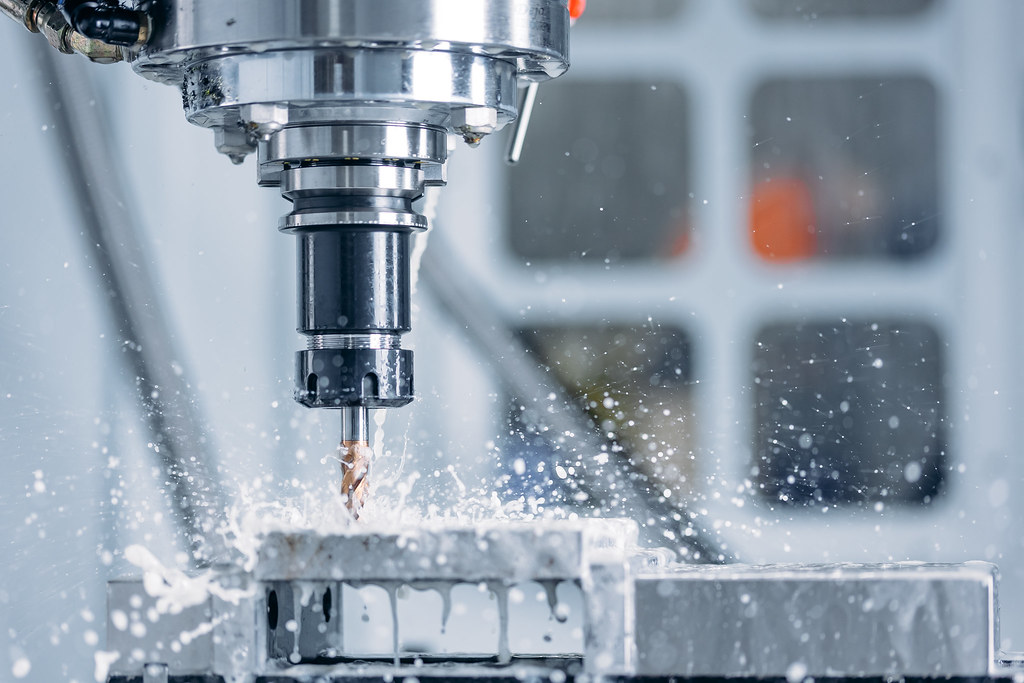
For this reason, most engineered forgings undergo finish machining on functional surfaces: bearing seats, sealing faces, threaded holes, mating flanges, and any feature with a tight tolerance or fine surface-finish requirement. A well-designed forging is intended to arrive close to net shape, minimizing the amount of material that must be removed afterward. This approach captures the metallurgical benefits of forging on the load-bearing core of the part while using machining only where precision is genuinely needed, which keeps cost and cycle time in check.
Heat treatment, such as normalizing, quenching and tempering, or solution treatment and aging, is also commonly applied after forging to develop the final mechanical properties, followed by appropriate surface treatment for corrosion protection or wear resistance.
Typical Applications by Industry
Forged components appear across virtually every demanding sector:
- Automotive and commercial vehicles: crankshafts, connecting rods, steering and suspension parts, gears, and axle components.
- Aerospace: landing gear, structural fittings, engine discs, and shafts where fatigue performance is paramount.
- Energy: flanges, valve bodies, pump and turbine parts, and rolled rings for wind and gas turbines.
- Oil and gas: high-pressure fittings, wellhead components, and drilling hardware.
- Industrial machinery and tools: wrenches, gears, fasteners, and other components subject to heavy, repeated loads.
Choosing the Right Forging Approach
Selecting a forging process is a matter of weighing geometry, loading, volume, and tolerance requirements together. As a practical guide: large, simple, low-volume parts favor open-die forging; complex, repeatable, higher-volume parts favor closed-die forging; circular pressure- and fatigue-critical parts favor seamless rolled rings; and small, high-precision, high-volume parts may justify cold forging. Temperature regime, material, and downstream machining and heat treatment then refine the plan.
The most reliable results come from involving a manufacturing partner early, while the design is still flexible. Decisions about parting lines, draft angles, fillet radii, and machining allowances made at the design stage have a large effect on forging quality, yield, and cost. As an ISO 9001 certified precision manufacturer in Shanghai, MechPart Pro works with engineers and procurement teams across more than 40 countries to align forging method, material, and finish machining with each part's real-world demands. If you are weighing forging against casting or machining for an upcoming component, our engineering team is happy to review your drawings and recommend the most effective route.
Related capabilities
Have a part to make?
Upload your CAD for a detailed quote and free DFM feedback within 24 hours.